Verified
I started because I was waking twice most nights. The change was gradual, not dramatic, but I felt less urgency by the fifth week. Cutting evening chai made a bigger difference than I expected.
29 Aug 2026

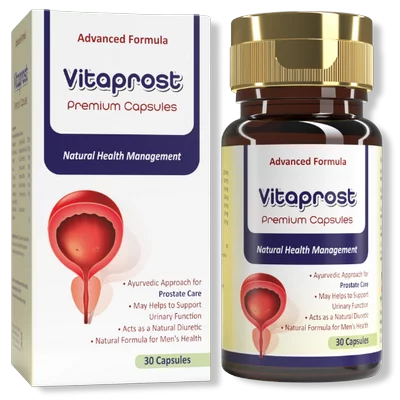
Vitaprost is an Ayurvedic capsule supplement for adult men seeking daily prostate and urinary comfort support. It is intended for age-related changes such as slower urine flow or more frequent night-time bathroom visits, with a focus on gradual urinary wellbeing rather than rapid symptom relief.
Vitaprost is an Ayurvedic capsule supplement created for men seeking daily prostate and urinary comfort support. It is intended for adult men who notice age-related changes such as slower urine flow or more frequent night-time bathroom visits. Its prostate-care approach focuses on maintaining urinary wellbeing rather than providing rapid symptom relief.
Vitaprost is an Ayurvedic capsule supplement for adult men seeking daily prostate and urinary comfort support. The exact ingredients and their amounts are not specified in the available information; refer to the product pack for composition details.
Vitaprost is taken orally as capsules. Use the daily intake stated in the product directions and swallow each capsule with water.
A consistent routine is more useful than irregular use. Taking capsules at the same meal each day can make the habit easier to maintain and may be gentler for people who experience mild stomach sensitivity with supplements.
A common misunderstanding is that more capsules will produce quicker improvement. Increasing a supplement intake without a clinical reason can increase the chance of stomach upset and makes it harder to identify the cause of any unwanted effect.
Vitaprost is an Ayurvedic prostate-support supplement intended to support urinary wellbeing through its nutritional and Ayurvedic approach. Its benefit is expected to be gradual rather than an immediate pharmacological change in urinary flow.
Vitaprost is designed for steady use as part of a daily prostate-support routine. It is most relevant for adult men seeking daily support for prostate and urinary comfort when urinary changes are mild and stable, such as occasional slower flow or increased night-time urination.
The European Association of Urology describes these symptoms as lower urinary tract symptoms, often shortened to LUTS [1].
Prostate symptoms have different causes, so the best approach depends on symptom severity, prostate size, medical history, and whether complications are present.
| Approach | Main role | Expected pattern |
|---|---|---|
| Vitaprost capsules | Daily nutritional and Ayurvedic prostate-care support | Gradual support with regular use |
| Prescription alpha-blocker therapy | Relaxes smooth muscle around the prostate and bladder neck | Urinary-flow changes may appear within days |
| Prescription 5-alpha-reductase inhibitor therapy | Reduces hormonal stimulation of prostate growth in selected men | Benefits usually develop over months |
Prescription medicines can be appropriate for men with moderate or troublesome BPH symptoms. Alpha-blockers may cause dizziness or ejaculation changes. Medicines that shrink the prostate can take months to show benefit and may affect sexual function. NICE guidance recommends symptom assessment, examination, and targeted testing before choosing treatment for bothersome male urinary symptoms [2].
Vitaprost suits men looking for a capsule-based supportive routine. It does not replace assessment when symptoms are progressing or affecting sleep, work, travel, or quality of life.
Vitaprost is not for you if you have had an allergic reaction to any component of the capsule formulation.
Extra caution is appropriate in the following situations:
Prostate symptoms should not be self-classified as BPH without evaluation when warning signs are present. The WHO notes that urinary complaints may have several causes and require assessment when symptoms are persistent, severe, or accompanied by alarm features [3].
Do not use Vitaprost if you have previously reacted badly to one of its capsule ingredients. You should also seek medical advice rather than relying on the supplement if urination is rapidly becoming difficult, you cannot pass urine, you have blood in the urine, fever, chills, burning, pelvic pain, unexplained weight loss, bone pain, or persistent fatigue. Discuss use with a clinician if you are being assessed for raised PSA, take blood-thinning or hormone medicines, use several supplements, or have a prostate procedure planned.
Vitaprost is generally intended for regular wellness use, yet any capsule supplement can cause individual intolerance. Mild digestive discomfort, nausea, bloating, loose stools, constipation, or headache may occur in sensitive users.
Stop taking Vitaprost and seek urgent care if there are signs of a serious allergic reaction, such as facial swelling, wheezing, widespread hives, or difficulty breathing. New severe urinary pain, fever with urinary symptoms, visible blood in urine, or inability to pass urine are not effects to manage at home.
Several avoidable habits can make prostate-related symptoms seem worse.
In clinical practice, doctors usually separate mild, stable urinary symptoms from symptoms that suggest obstruction, infection, or another condition requiring investigation. The first group may benefit from routine changes, monitoring, and supportive measures. The second group needs diagnosis before any self-care plan becomes the main focus.
A clinician will often ask about night-time urination, stream strength, urgency, medicines for colds or allergies, diabetes, sleep apnoea, constipation, and fluid intake. These details can reveal contributors that are easy to miss. This history helps identify reversible triggers. It also guides decisions about testing and follow-up. It can make the consultation more efficient.
Doctors also set realistic expectations. A capsule routine may support comfort, but it does not work like an instant urinary-flow medicine. Persistent symptoms that disrupt sleep deserve a structured assessment, which may include urine testing, kidney-function checks, a rectal examination, PSA discussion, or ultrasound where clinically indicated.
Vitaprost is intended for adult men seeking daily support for prostate and urinary comfort. It is most relevant when urinary changes are mild and stable, such as occasional slower flow or increased night-time urination. The EMA’s 2024 approach to herbal medicinal products recognises that botanical preparations can have traditional supportive uses, while persistent or worsening symptoms still require clinical evaluation [4]. Women and children should not use a prostate-care supplement unless a clinician has given a specific reason.
Changes in urinary comfort are usually gradual because prostate and bladder symptoms are influenced by age, fluid timing, sleep, constipation, and other health factors. A fair evaluation involves regular use and symptom tracking over several weeks rather than judging the product after a few days. The 2025 European Association of Urology guidance emphasises symptom scores and follow-up when assessing male LUTS. Rapid worsening is a reason for medical review, not for increasing capsule intake.
Some men use prostate-support supplements alongside prescribed treatment, yet the combination should be reviewed when regular medicines are involved. This is more relevant for men using blood thinners, hormone-related treatment, or several products for urinary symptoms. CDSCO guidance from 2024 advises that patients disclose all health products used when discussing treatment decisions, since supplements may still affect tolerability or clinical interpretation. Do not replace prescribed BPH treatment with Vitaprost without the prescriber’s direction.
Vitaprost is a prostate-care supplement and is not a treatment for prostate cancer. Prostate cancer can be silent in early stages, while urinary symptoms are more often linked to benign enlargement or bladder conditions. WHO cancer information updated in 2024 identifies timely assessment and appropriate medical treatment as central to prostate-cancer care. Blood in urine, unexplained weight loss, persistent bone pain, or rapidly changing urinary function should be assessed promptly.
Night-time urination is called nocturia. Prostate enlargement can contribute, but late fluids, caffeine, alcohol, diabetes, sleep apnoea, leg swelling, and some medicines can also play a role. NICE guidance updated in 2023 advises assessing urinary symptoms in their wider clinical context rather than assuming one cause. Reducing late-evening drinks and recording night-time awakenings can provide useful information.
Inability to pass urine is acute urinary retention and requires urgent medical care. It can cause painful bladder distension and may affect kidney function if untreated. The European Association of Urology’s 2025 guidance identifies retention as a complication requiring prompt assessment in men with urinary symptoms. Do not wait for a supplement routine to improve this situation.