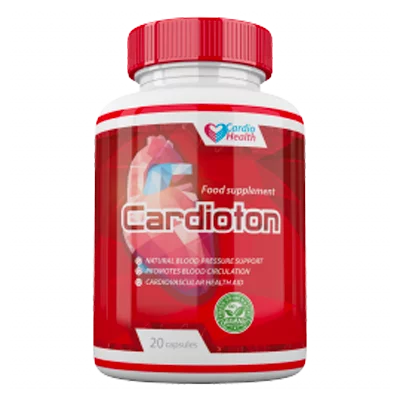
Cardioton is a capsule-based food supplement for adults who want nutritional support for cardiovascular wellbeing. It is intended for people maintaining healthy blood-pressure and heart-care habits. Its benefit is supportive rather than emergency treatment or a replacement for prescribed therapy.
Description
Cardioton is a food supplement in capsule form for adults seeking nutritional support for cardiovascular wellbeing. It is intended for people focused on maintaining healthy blood pressure and heart-care habits. Cardioton capsules fit alongside routine measures such as balanced eating, physical activity, sleep, and regular blood-pressure monitoring.
Composition
Cardioton is a food supplement in oral capsule form for adults seeking nutritional support for cardiovascular wellbeing. The available product information does not specify active ingredients or their amounts, so the exact composition should be checked in the product information. Cardioton is intended to complement healthy eating, physical activity, sleep, and regular blood-pressure monitoring.
Dosage and usage
Cardioton is supplied as oral capsules. Capsules are generally taken whole with water and should not be opened, crushed, or mixed into hot drinks unless product-specific instructions expressly permit this.
Daily Use Routine
Take Cardioton orally with water.
Use the dose and schedule stated in the product information for Cardioton.
Choose a consistent time that fits meals and existing medicines.
Do not double the next intake after forgetting a capsule.
Keep blood-pressure prescriptions on their usual schedule unless the prescriber changes them.
Take Cardioton only by mouth. Swallow each capsule with water rather than chewing it. A capsule taken at a repeatable time is easier to remember than one taken only when a person feels worried about blood pressure.
If a dose is missed, resume the regular schedule at the next planned time. Taking two capsules together may increase the chance of unwanted effects without offering a meaningful cardiovascular advantage.
Do not measure blood pressure immediately after tea, coffee, exercise, bathing, smoking, or an argument. Each can temporarily change the result and create a misleading impression that a supplement has stopped working.
How it works
Cardioton supports a heart-conscious lifestyle for adults concerned about blood-pressure balance and cardiovascular wellbeing. The benefit of a supplement is best judged through steady habits and properly measured readings, not by how energetic someone feels on a single day. A supplement cannot confirm the cause of an abnormal reading.
Indications
Cardioton may suit adults who want a capsule-based supplement as part of a heart-conscious routine. Its role is supportive. It does not replace prescribed treatment for hypertension, angina, arrhythmia, heart failure, stroke prevention, or kidney disease.
A healthy cardiovascular routine has several parts:
Limiting excess salt from packaged foods, pickles, sauces, and salty snacks.
Eating vegetables, fruit, pulses, whole grains, and unsalted nuts.
Staying physically active within personal medical limits.
The European Society of Cardiology describes blood-pressure control as a combination of lifestyle action and medical therapy when needed; supplements should not delay treatment for sustained hypertension [2].
The WHO identifies hypertension as a major preventable contributor to cardiovascular disease, with lifestyle measures remaining central to long-term blood-pressure management [1].
Comparison
Cardioton is a food supplement. It belongs in a different category from prescribed antihypertensive medicines and from lifestyle treatment.
Approach
Main role
When it is used
Cardioton capsules
Nutritional support for cardiovascular wellbeing
As part of a regular heart-health routine
Lifestyle measures
Reduces modifiable blood-pressure drivers
For nearly all adults, with or without medicines
Prescribed antihypertensive medicines
Lowers blood pressure through defined drug actions
When a clinician identifies hypertension or another cardiovascular indication
Prescription medicines such as ACE inhibitors, angiotensin-receptor blockers, calcium-channel blockers, and thiazide-type diuretics have established roles in hypertension care. Their choice depends on blood-pressure readings, kidney function, age, pregnancy status, diabetes, and other medicines. NICE guidance emphasises confirmed blood-pressure assessment before starting or changing drug therapy [3].
Cardioton may be a reasonable supportive addition for someone already building healthier routines. It is not a substitute for a prescribed medicine, and it should not be used to reduce or stop a prescribed dose independently.
Contraindications
Cardioton is not for you if you have previously had a serious allergic reaction to any of its ingredients.
Extra care is appropriate for:
Adults taking medicines for high blood pressure, heart rhythm disorders, heart failure, or angina.
People using blood thinners or antiplatelet medicines.
People with chronic kidney disease or significant liver disease.
Pregnant or breastfeeding adults.
Anyone with recurrent fainting, unexplained palpitations, or very low blood pressure.
People awaiting evaluation for chest discomfort or newly detected high blood pressure.
This matters when a supplement is added to a regimen containing blood-pressure or heart medicines, because symptoms and readings may change [4].
When this is not for you
It is not a substitute for a prescribed medicine, and it should not be used to reduce or stop a prescribed dose independently.
Cardioton is not an emergency intervention.
Side effects
Food supplements are often well tolerated, though an individual reaction is still possible. Possible concerns include nausea, abdominal discomfort, loose stools, headache, dizziness, or sensitivity to one of the ingredients. Stop using Cardioton and seek urgent care for facial swelling, wheezing, widespread hives, fainting, or severe chest symptoms.
Dizziness deserves attention in people already using medicines that lower blood pressure. A low reading combined with weakness, blurred vision, unsteadiness, or near-fainting may indicate excessive blood-pressure reduction or another medical problem.
Common mistakes
Taking Cardioton only when a blood-pressure reading feels alarming.
Doubling capsules after a missed intake.
Stopping prescribed medicines without clinical direction.
Measuring blood pressure over clothing or while talking.
Using wrist monitors without checking their technique against an upper-arm device.
Ignoring recurrent dizziness because blood pressure seems lower.
Combining several heart-focused supplements at once, making reactions difficult to trace.
Assuming palpitations are harmless because they pass quickly.
For a useful home record, take two readings one minute apart and record both. A single isolated number is less helpful than a consistent trend collected under similar conditions.
What doctors say
In clinical practice, doctors often focus first on the pattern behind a blood-pressure reading. One high result after stress, poor sleep, pain, or caffeine intake does not always establish hypertension. Repeated elevated readings are more meaningful.
Doctors also see a frequent problem: patients add a supplement but quietly stop their prescribed tablets once readings improve. This can lead to rebound hypertension, fluid retention, angina symptoms, or stroke risk in susceptible people. Cardioton should be viewed as an addition to sensible cardiovascular care, not a reason to alter prescribed treatment.
For adults with diabetes, kidney disease, prior stroke, coronary artery disease, or heart failure, medication decisions need individual assessment. These conditions change blood-pressure targets and the choice of treatment.
Frequently asked questions
Can Cardioton treat high blood pressure?
Cardioton is a food supplement intended to support cardiovascular wellbeing and healthy blood-pressure habits. It is not a replacement for treatment prescribed for diagnosed hypertension. WHO guidance published in 2023 identifies diagnosis, repeat measurement, lifestyle action, and appropriate medicines as key elements of hypertension care. Persistently high readings need clinical assessment rather than self-treatment alone.
Can Cardioton be used with blood-pressure medicines?
People taking antihypertensive medicines should be cautious when adding Cardioton because dizziness or lower-than-usual readings may require review of the full regimen. CDSCO guidance published in 2024 stresses the value of qualified advice when products are combined in chronic conditions. Do not stop, reduce, or skip prescribed tablets because of a supplement. Keep a record of symptoms and home readings.
When should Cardioton be taken?
Cardioton capsules should be taken orally with water according to the product-specific schedule. A consistent daily time is useful because it reduces missed intakes. NICE hypertension guidance from 2023 supports structured monitoring and treatment adherence for people managing elevated blood pressure. A missed capsule should not be followed by a double intake.
Can Cardioton cause dizziness?
Dizziness can occur for several reasons, including dehydration, low blood pressure, medication effects, illness, or an individual response to a supplement. The European Society of Cardiology’s 2024 hypertension guidance treats symptomatic low readings as clinically relevant, especially in people using pressure-lowering treatment. Stop using Cardioton and arrange prompt medical advice if dizziness is recurrent, severe, or accompanied by fainting, chest symptoms, or an irregular heartbeat.
Is Cardioton suitable during pregnancy or breastfeeding?
Pregnancy-related blood-pressure changes need medical assessment because conditions such as pre-eclampsia require specific care. The WHO recommendations on maternal health published in 2023 recognise hypertension in pregnancy as a situation requiring professional monitoring. Cardioton should not be started during pregnancy or breastfeeding without advice from the clinician managing maternal care. This also applies to people planning pregnancy while using blood-pressure medicines.
What should be done for a very high blood-pressure reading?
Sit quietly, rest for five minutes, and repeat the reading using correct technique. Seek urgent medical care if a very high reading occurs with chest pain, breathlessness, weakness, difficulty speaking, confusion, visual disturbance, or a severe unusual headache. WHO hypertension resources updated in 2023 link uncontrolled pressure with serious cardiovascular and cerebrovascular complications. Cardioton is not an emergency intervention.
People with hypertension often feel well for years. That is why occasional symptom-free days are not a reliable guide to cardiovascular risk. Properly measured readings, follow-up appointments, and adherence to prescribed treatment remain more informative than perceived energy levels.
Scientific Evidence and Cardiovascular Care
Research on blood pressure strongly supports dietary patterns, physical activity, weight management where relevant, reduced sodium intake, and medically supervised treatment when readings remain high. The evidence for any individual food supplement is more limited than the evidence for established hypertension medicines.
The WHO’s technical guidance on hypertension highlights regular measurement, risk assessment, and access to appropriate treatment as core components of prevention and control [5]. Cardioton can support a person’s intention to care for cardiovascular health, yet it should not be expected to diagnose the cause of high blood pressure or manage complications.
Cardioton: Reviews and Experiences
R
Rahul, 52
Pune
Using for three weeks
Verified
Rating: 4.5 out of 5
I added Cardioton to my morning routine while cutting down salty snacks. I liked the capsule format because it was easy to keep beside my water bottle. My readings varied less when I measured them properly, though I also started walking every evening.
15 Aug 2026
S
Sanjay, 61
Bengaluru
Using for two weeks
Verified
Rating: 3.5 out of 5
I used it alongside my usual blood-pressure tablets. I felt mild stomach discomfort for the first few days, so I moved it to after breakfast and it settled. I did not change my prescribed medicine.
20 Aug 2026
M
Meera, 47
Chennai
Using for duration not stated
Verified
Rating: 4.5 out of 5
The capsules were easy to swallow. The biggest change came from checking my pressure regularly instead of guessing from headaches. I treated Cardioton as support, not as a replacement for the routine my doctor had already set.
28 Aug 2026
A
Anita, 58
Hyderabad
Using for ten days
Verified
Rating: 2 out of 5
I stopped after feeling light-headed one afternoon because I already use blood-pressure medication. The reading was lower than usual, and I arranged a review of all my medicines and supplements before restarting anything.
11 Sep 2026
Sources
World Health Organization (2023). Hypertension
European Society of Cardiology (2024). 2024 ESC Guidelines for the management of elevated blood pressure and hypertension
National Institute for Health and Care Excellence (2023). Hypertension in adults: diagnosis and management
Central Drugs Standard Control Organisation (2024). Guidance document for industry: pharmacovigilance requirements for human pharmaceutical products
World Health Organization (2021). Guideline for the pharmacological treatment of hypertension in adults