Verified
I used Cardizoom as part of a routine that included evening walks and less packaged food. I liked having a reminder to track my blood pressure, although I did not expect it to replace my regular treatment.
13 Sep 2026

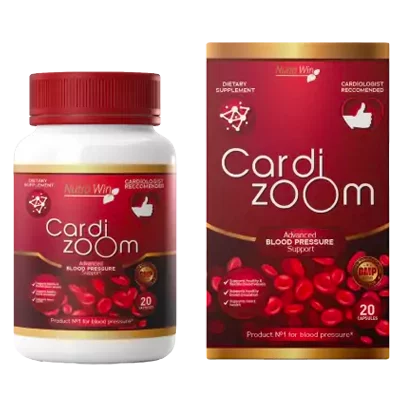
Cardizoom is a dietary supplement for adults seeking additional cardiovascular and blood-pressure support. It complements monitoring, healthy habits, and prescribed care rather than replacing antihypertensive treatment.
Cardizoom is a dietary supplement formulated for advanced blood-pressure support. It is intended for adults who want to support cardiovascular wellbeing alongside regular blood-pressure monitoring. Its role is supportive rather than a replacement for treatment prescribed for hypertension.
Cardizoom is a dietary supplement for advanced blood-pressure and cardiovascular support. The available information does not specify its ingredients or amounts; refer to the product pack for the exact composition and serving details.
Take Cardizoom by mouth according to the stated serving directions supplied with the product. Choose a consistent time of day so the supplement becomes part of an established routine.
A practical routine includes:
Consistency matters, but more is not better. Taking additional servings to lower a blood-pressure reading quickly can create avoidable problems, especially for people also using antihypertensive treatment.
Cardizoom is intended to provide supportive cardiovascular and blood-pressure care for adults alongside monitoring and healthy habits. It does not replace prescribed antihypertensive treatment, and its exact mode of action is not specified in the available product information.
Cardizoom is positioned as a dietary supplement for people focused on blood-pressure support and general heart health. It may fit into a routine that includes home blood-pressure readings, a balanced diet, regular movement, adequate sleep, and medical treatment when hypertension has been diagnosed.
Cardizoom should be viewed as supportive care. It does not replace antihypertensive medicines prescribed for conditions such as persistent hypertension, heart failure, kidney disease, or previous stroke.
The World Health Organization describes hypertension as a major cardiovascular risk factor because persistent high pressure can damage arteries, the heart, brain, and kidneys over time [1].
Cardizoom is a dietary supplement rather than a prescription antihypertensive medicine. The distinction matters because diagnosed hypertension is assessed and treated according to cardiovascular risk, repeated blood-pressure measurements, and associated conditions.
| Approach | Main role | Key limitation |
|---|---|---|
| Cardizoom dietary supplement | Supports a cardiovascular wellness routine | It should not be used to replace prescribed hypertension treatment |
| Lifestyle measures | Can improve several blood-pressure drivers, including dietary sodium intake and inactivity | Benefits require regular, sustained habits |
| Prescription antihypertensive medicines | Lower blood pressure through defined pharmacological actions | Require individual selection and monitoring for adverse effects |
Prescription options may work by relaxing blood vessels, reducing fluid retention, slowing the heart rate, or modifying hormone systems that regulate blood pressure. The National Institute for Health and Care Excellence recommends structured assessment and stepwise treatment for adults with confirmed hypertension, rather than relying on symptoms alone [2].
For mild risk factors, clinicians often begin with lifestyle changes and repeated measurements. For higher readings, diabetes, kidney disease, established cardiovascular disease, or pregnancy-related hypertension, medical treatment has a more central role.
Extra caution is appropriate in the following situations:
Do not stop, reduce, or split prescribed antihypertensive tablets because readings improve during a healthier routine. The European Society of Cardiology stresses that blood-pressure treatment decisions should reflect cardiovascular risk and clinical assessment, not one isolated measurement [3].
Cardizoom is not for you if you have a known allergy to any of its ingredients.
Dietary supplements are often well tolerated, though individual reactions can occur. Possible effects include nausea, abdominal discomfort, loose stools, constipation, headache, rash, itching, or a feeling of light-headedness.
Stop using Cardizoom and seek urgent medical assessment for chest pain, fainting, severe breathlessness, facial swelling, wheezing, or a widespread rash. These symptoms need prompt evaluation regardless of whether they are linked to the supplement.
Light-headedness deserves attention. It can reflect low blood pressure, dehydration, missed meals, anaemia, infection, or an interaction with medicines. A home blood-pressure result can help clarify the situation, but severe or persistent symptoms should not be managed by repeatedly changing supplements or medicines.
One frequent mistake is judging blood pressure by how a person feels. Hypertension is often silent, while headaches and fatigue have many possible causes.
Another is checking blood pressure only after worrying symptoms occur. A scheduled log is more useful than occasional readings taken during stress.
Some people also take blood-pressure medicines inconsistently because their readings look better for a few days. This can cause avoidable fluctuations. Others add several supplements at once, making it difficult to identify the source of nausea, rash, palpitations, or dizziness.
Using the wrong cuff size is a surprisingly common issue. A cuff that is too small can produce an artificially high reading.
In clinical practice, doctors usually welcome patients who monitor their blood pressure and improve daily habits. The concern begins when a supplement is used as a substitute for assessment after repeatedly high readings.
A clinician will usually ask about the timing of readings, cuff size, salt intake, alcohol, sleep, smoking, family history, kidney function, and all medicines being taken. They may also check for warning symptoms such as exertional chest pressure, palpitations, swelling of the legs, sudden shortness of breath, or neurological changes.
Cardizoom may be considered as part of a broader wellness routine. Expectations should remain measured. A supplement cannot diagnose hypertension, identify an irregular heart rhythm, or determine whether raised pressure is damaging the kidneys or eyes.
The European Medicines Agency’s clinical guidance for hypertension medicines reflects the same basic principle: meaningful blood-pressure claims require defined evaluation, repeated measurements, and attention to cardiovascular outcomes [4].
No. Cardizoom is a dietary supplement and should not replace treatment prescribed for confirmed hypertension. The WHO’s 2023 hypertension guidance highlights the role of diagnosis, risk assessment, lifestyle measures, and medicines when clinically indicated. Stopping prescribed treatment without a prescriber’s direction can allow blood pressure to rise again.
There is no fixed timeline that can be expected from a dietary supplement. Blood pressure naturally varies across the day with sleep, activity, stress, meals, caffeine, and medication timing. NICE guidance from 2023 supports repeated readings and structured monitoring when assessing hypertension, rather than drawing conclusions from a short-term change.
A medication review is sensible before combining Cardizoom with antihypertensive medicines, diuretics, heart-rhythm medicines, diabetes treatment, or blood thinners. The European Society of Cardiology’s 2024 guidance emphasises individualised blood-pressure care because treatment choices depend on a person’s health profile. Dizziness, fainting, unusual weakness, or consistently low readings need medical review.
Long-term use should be based on tolerance, health goals, and a person’s complete medication list. The EMA’s 2016 hypertension clinical guidance shows why blood-pressure management requires ongoing evaluation rather than a one-time decision. People with kidney disease, heart disease, pregnancy, or multiple medicines need more careful oversight.
A very high reading accompanied by chest pain, breathlessness, weakness on one side of the body, confusion, severe headache, fainting, or sudden visual changes needs urgent medical care. The WHO described hypertension in 2023 as a major risk factor for heart attack and stroke, especially when it remains uncontrolled. Do not attempt to manage these symptoms by taking extra servings of Cardizoom.